
The Roadmap of structured cabling
Every system we install, like many other trades in construction, is a carefully sequenced process that begins long before the first cable is pulled and continues throughout installation.
LVS breaks out our projects into defined phases that help our team plan labor, materials, scheduling, and execution from the initial estimate. It also gives our project partners a clear picture of the structure of the work and how each stage connects to the next.
1. Pathways + Routes
The pathways + routes phase is where we establish how the cabling will physically get from point A to point B. This means looking at pathways, tray, conduit, sleeves, penetrations, ceiling conditions, and the overall building layout.
2. Cable Rough-In
Once pathways are established, the rough phase is where the cabling starts moving through the building. This phase is about getting the infrastructure in place to evenutally support various technology systems and devices.
Our technicians install the horizontal cabling that will eventually serve devices throughout the space. From network connections and wireless access points to cameras, access control devices, AV systems, and other low-voltage technology, this structured cabling infrastructure creates the network connectivity throughout a facility.
3. Trim Stations + Devices
With the rough cabling in place, we then move to trimming the various connection points and devices.
This is where the cables serving individual devices are prepared and terminated at the work area. Depending on the system, that can mean installing connectors, jacks, faceplates, devices, or other components required to bring the cabling to its final point of connection.
4. Closet Termination
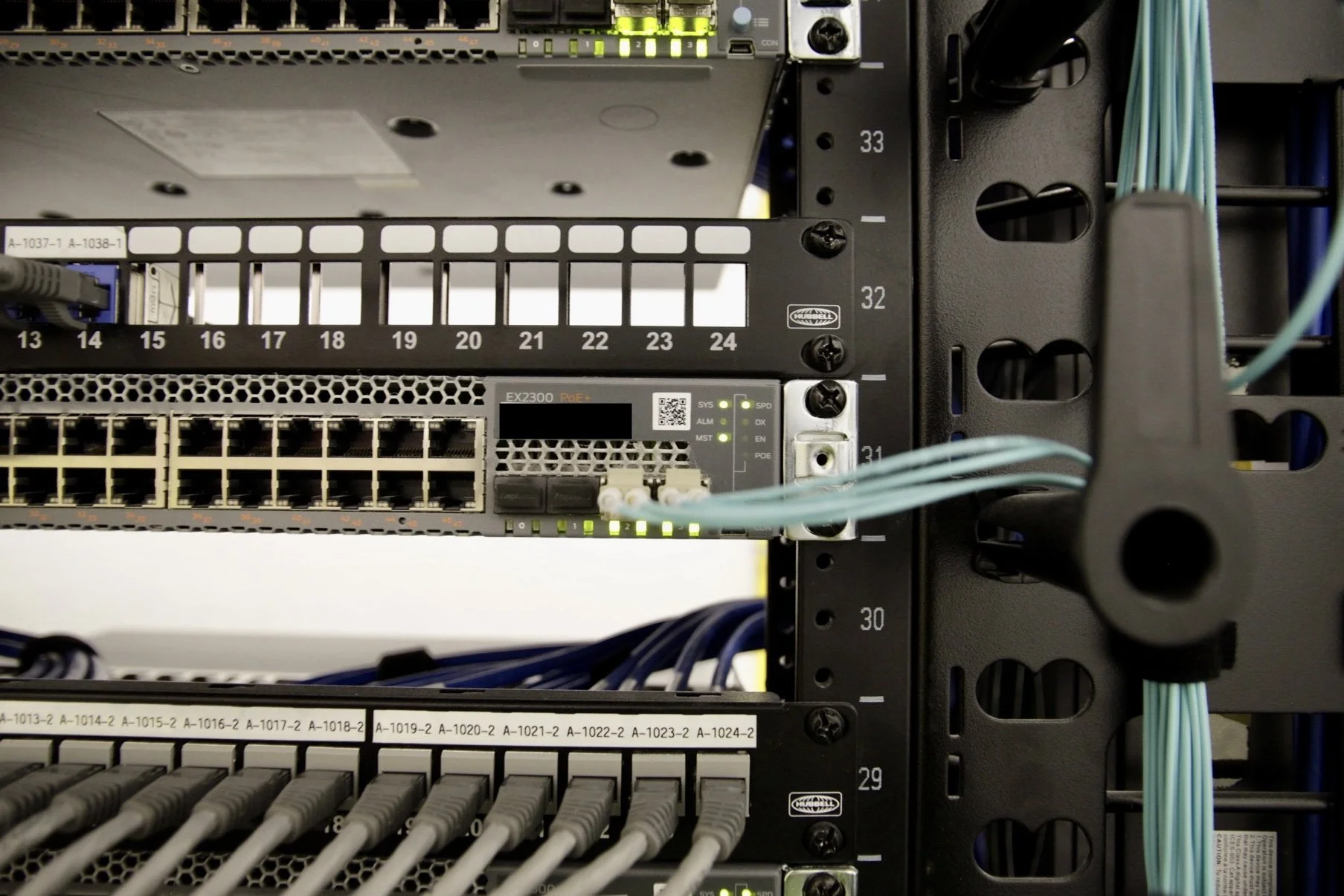
The other end of that horizontal cabling leads back to the telecommunications or equipment closet. In this phase, those cables are terminated, labeled, dressed, and organized into the appropriate patch panels or equipment.
Organization matters here. A properly built closet isn't just easier to look at, it's easier to service, troubleshoot, expand, and maintain throughout the life of the building.
5. Backbone Installation
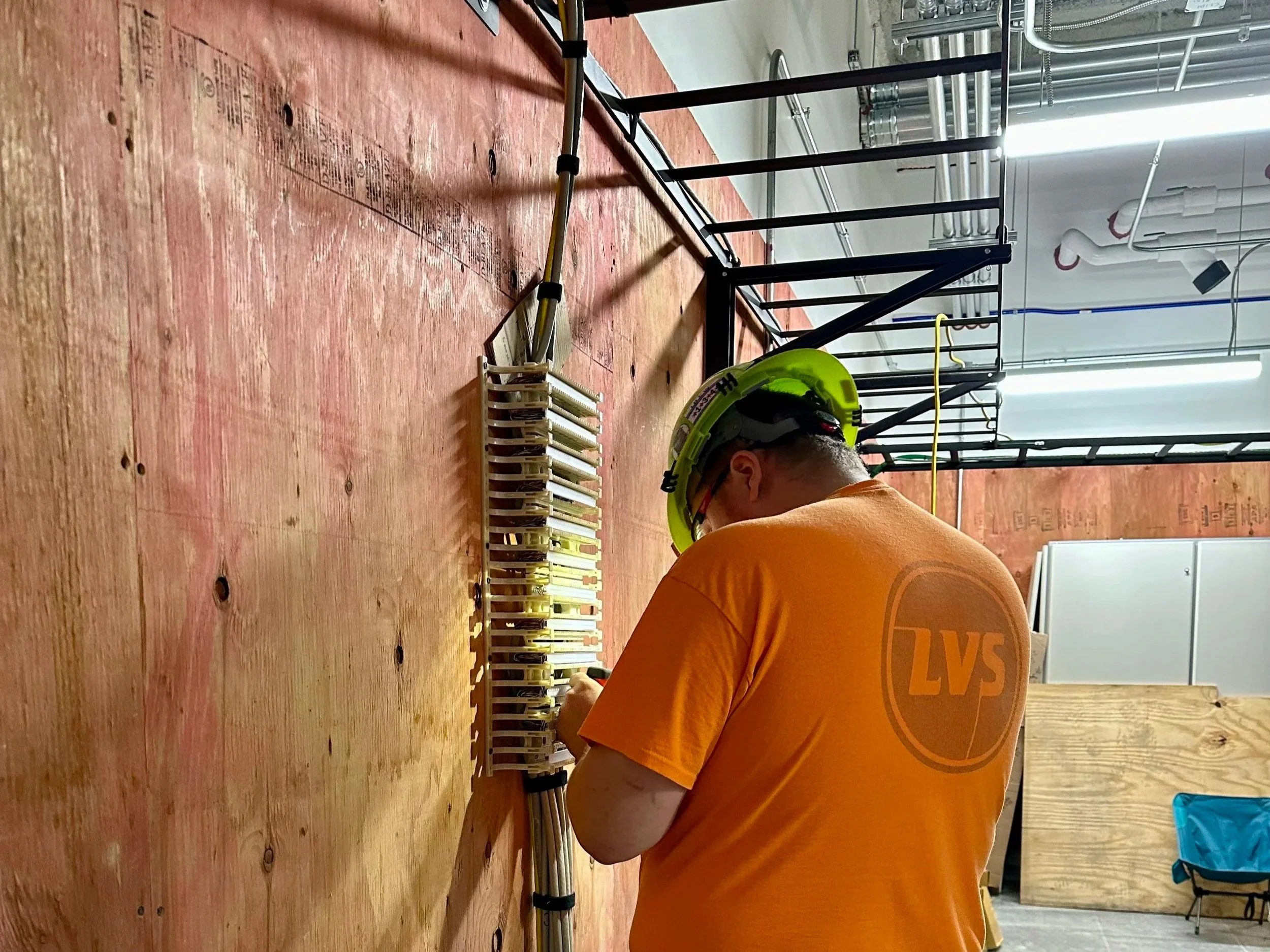
Horizontal cabling connects individual devices back to a closet. The backbone connects the closets and systems that make the larger network possible. Backbone rough-in may include fiber optic cabling and other backbone pathways connecting telecommunications rooms, equipment rooms, and other critical locations.
6. Backbone Termination
Once the backbone cabling is in place, it's time to terminate and prepare it for connection. For fiber, this can involve splicing and termination, along with the installation and organization of the appropriate enclosures and hardware. Other backbone cabling is similarly terminated and prepared for its final connection.
7. Equipment + Closet Build
The closet build brings the infrastructure and equipment together into an organized, functional space. These are the Main Distribution Frame (MDF) and Intermediate Distribution Frames (IDF). Patch panels, racks, fiber enclosures, switches, power, and other equipment are installed and arranged according to the project design.
8. Testing + Certification
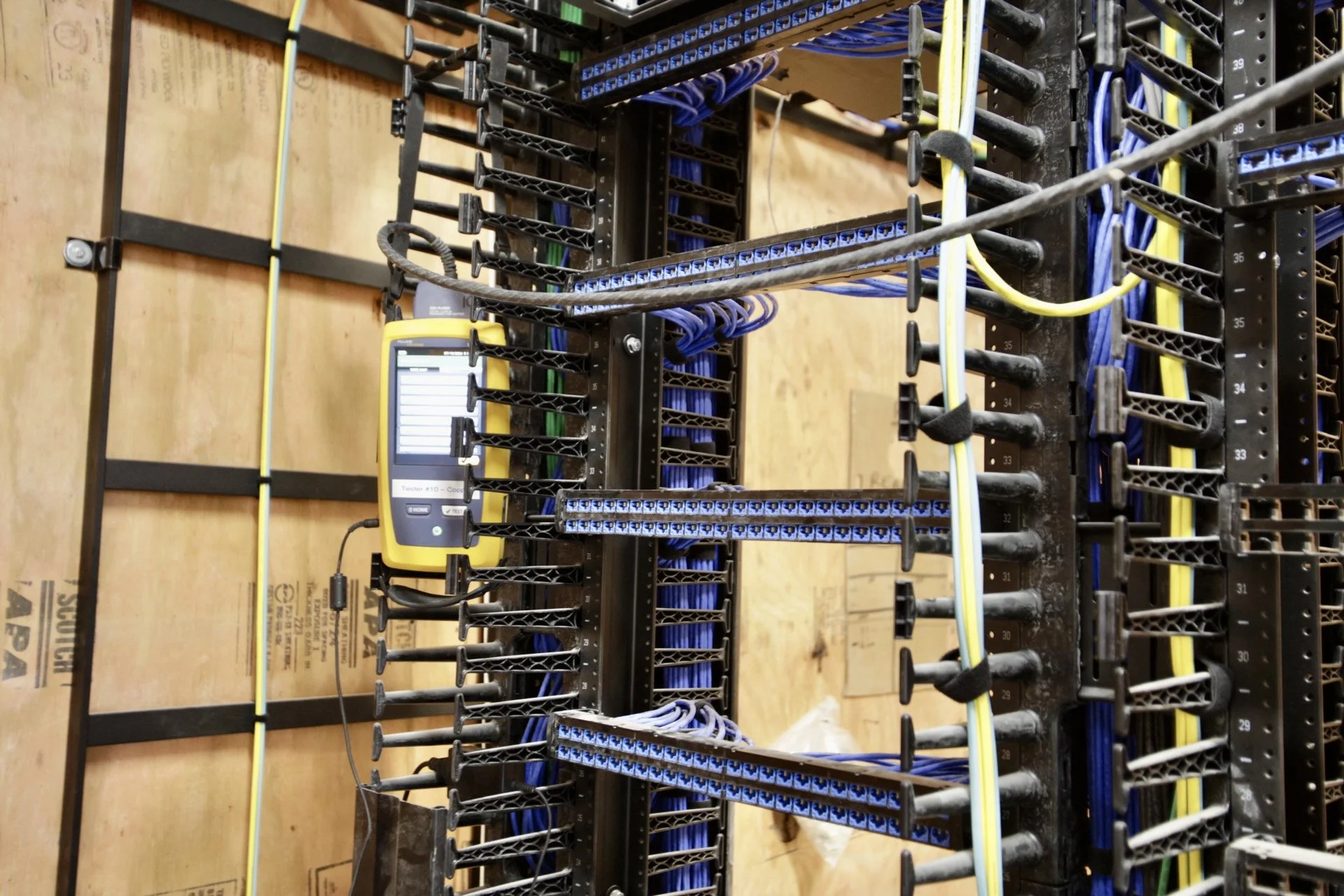
Testing verifies that the infrastructure installed throughout the project is performing as intended. Our technicians test the installed cabling according to the requirements of the system and project specifications, identify any issues, and address them before the project moves to completion.
For structured cabling, that can include certification testing of copper and fiber. The result is documentation that gives the client and project team confidence that the infrastructure was installed correctly and is ready to support the systems it was designed for.
Planning the Work Behind the Work
When LVS builds a project estimate, we're accounting for the work required across the entire installation. Labor, materials, equipment, sequencing, termination, testing, coordination, and the conditions of the project all factor into the plan. That upfront planning allows us to establish realistic labor expectations, coordinate the work with the construction schedule, and understand what needs to happen at each stage of the project.
From Routes to Results
From the first pathway to the final test, every phase plays a role in delivering a system that is organized, reliable, documented, and ready to perform. That's how we approach the work: plan the project, understand the sequence, execute each phase with intention, and build the infrastructure that keeps everything connected.