
Above the Ceiling: The Infrastructure That Powers Modern Buildings
When people walk into a finished school, office, healthcare facility, or warehouse, they notice the polished floors, fresh paint, lighting fixtures, and furniture. What they don't see is the vast network of infrastructure hidden above the ceiling that makes the building function every day.
Before ceiling tiles are installed and access becomes limited, an incredible amount of coordination takes place between multiple trades. For low voltage contractors, this phase is one of the most critical points in the entire project.
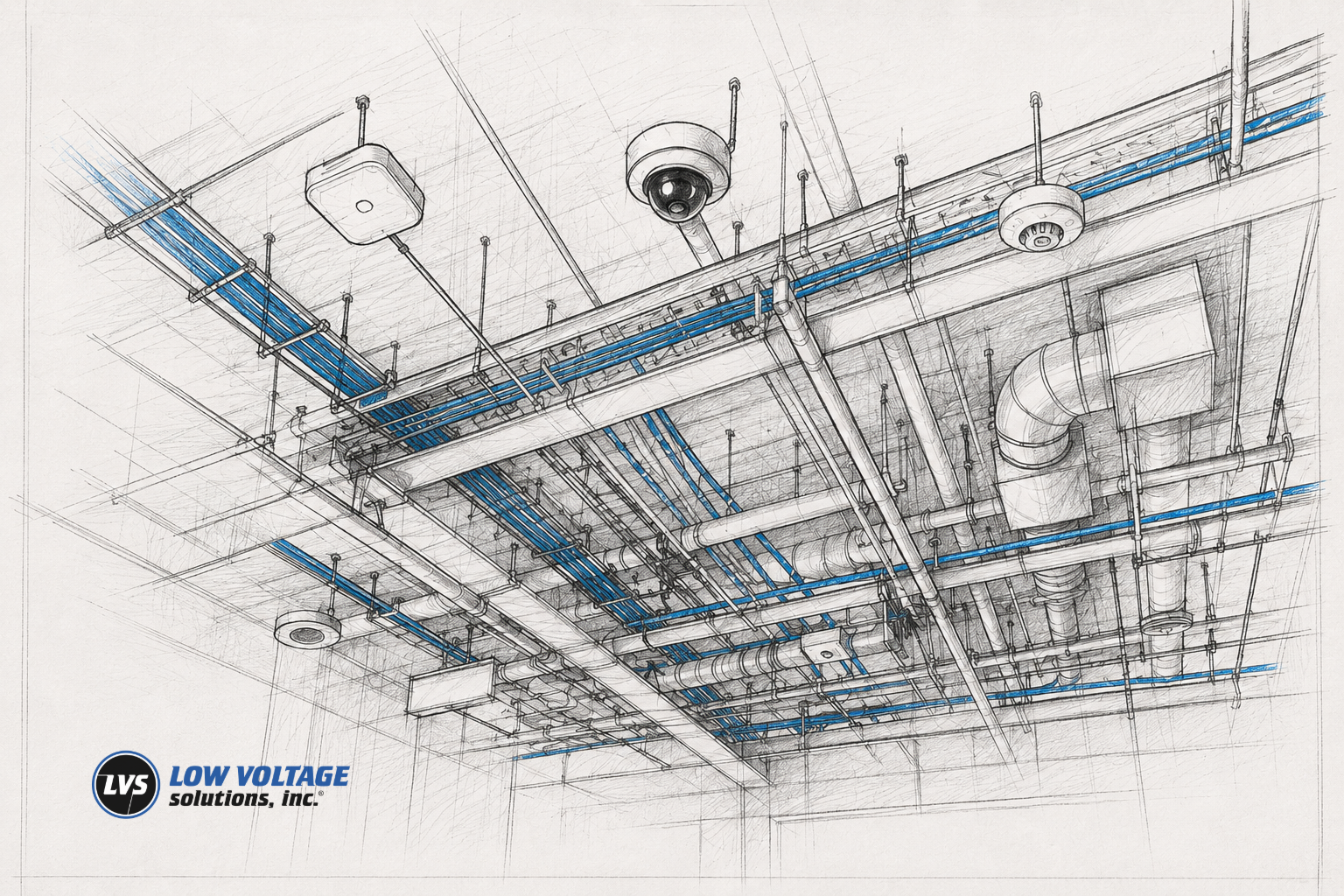
The Ceiling Space: A Building's Hidden Highway
The space above a ceiling is much more than empty air. It's a carefully coordinated environment that houses the systems responsible for communication, security, life safety, and connectivity.
Within this space, you'll often find:
Structured cabling pathways
Fiber optic backbone cabling
Wireless access point infrastructure
Security camera cabling
Access control wiring
Audio-visual system cabling
Sound masking infrastructure
Fire alarm devices and pathways
Building automation connections
Telecommunications rooms and distribution routes
Every pathway must be carefully planned to ensure systems perform properly while remaining accessible for future maintenance and expansion.
Coordination Starts Long Before Installation
By the time a technician pulls the first cable, extensive planning has already occurred.
Project managers, engineers, BIM coordinators, general contractors, electricians, mechanical contractors, and low voltage teams collaborate to determine where every system will be installed and how it will reach its destination.
A single ceiling space may need to accommodate, ductwork, plumbing, electrical, structural elements, fire protection, and low voltage pathways.Without proper coordination, conflicts can arise that lead to schedule delays, costly rework, and compromised system performance.
Pathways Matter
One of the most overlooked components of a low voltage system is the pathway itself.
Cable trays, conduits, J-hooks, sleeves, and backbone routes create the framework that supports the entire communications infrastructure. A well-designed pathway system protects cables, improves organization, and makes future upgrades significantly easier. Think of pathways as the road system of a building. Without them, connectivity becomes difficult to manage and nearly impossible to scale efficiently.
Proper pathways help ensure better cable performance, easier troubleshooting, cleaner installations, improved safety, and greater flexibility for future technology.
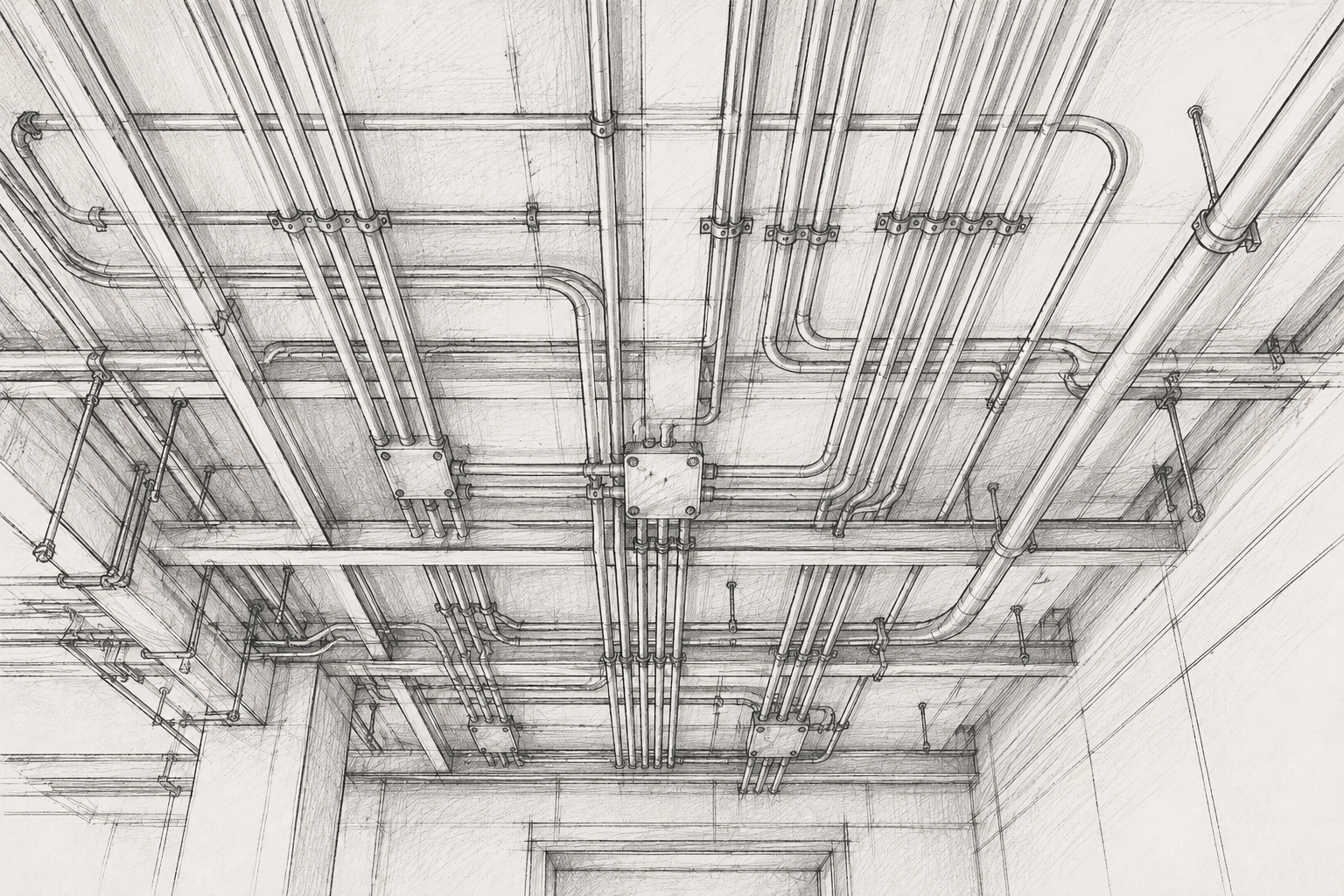
The Race Against the Ceiling
As construction progresses, low voltage teams work closely with other trades to complete infrastructure before ceilings are closed.
This period often involves:
Installing backbone cabling
Routing horizontal cable runs
Mounting device backboxes
Positioning wireless access point locations
Coordinating security and life safety devices
Testing pathways and cable routes
Once ceilings are installed, accessing these spaces becomes significantly more difficult and expensive. That's why thorough inspections and quality control are essential before the project moves into the next phase.
Building for the Future
Technology evolves rapidly. Buildings constructed today must be capable of supporting tomorrow's needs, whether that's increased wireless demand, additional security devices, enhanced AV capabilities, or new building technologies. When a Wi-Fi connection is strong, a security camera records flawlessly, an access control system functions seamlessly, or a fire alarm communicates properly, it means the infrastructure behind the scenes was designed and installed correctly.
Before the ceilings close and the finished spaces begin to take shape, hundreds of hours of planning, coordination, and craftsmanship are invested in creating the foundation that keeps a building connected, secure, and operational for years to come.
At LVS, we understand that successful projects begin long before the building opens its doors. By coordinating early, planning thoroughly, and focusing on quality infrastructure, we help create the hidden systems that power modern buildings every day.